Studio
Complete Guide to Colombia’s Coffee Regions
Explore how Colombia’s main coffee regions differ in location, the coffees they produce, and what to look for when tasting.
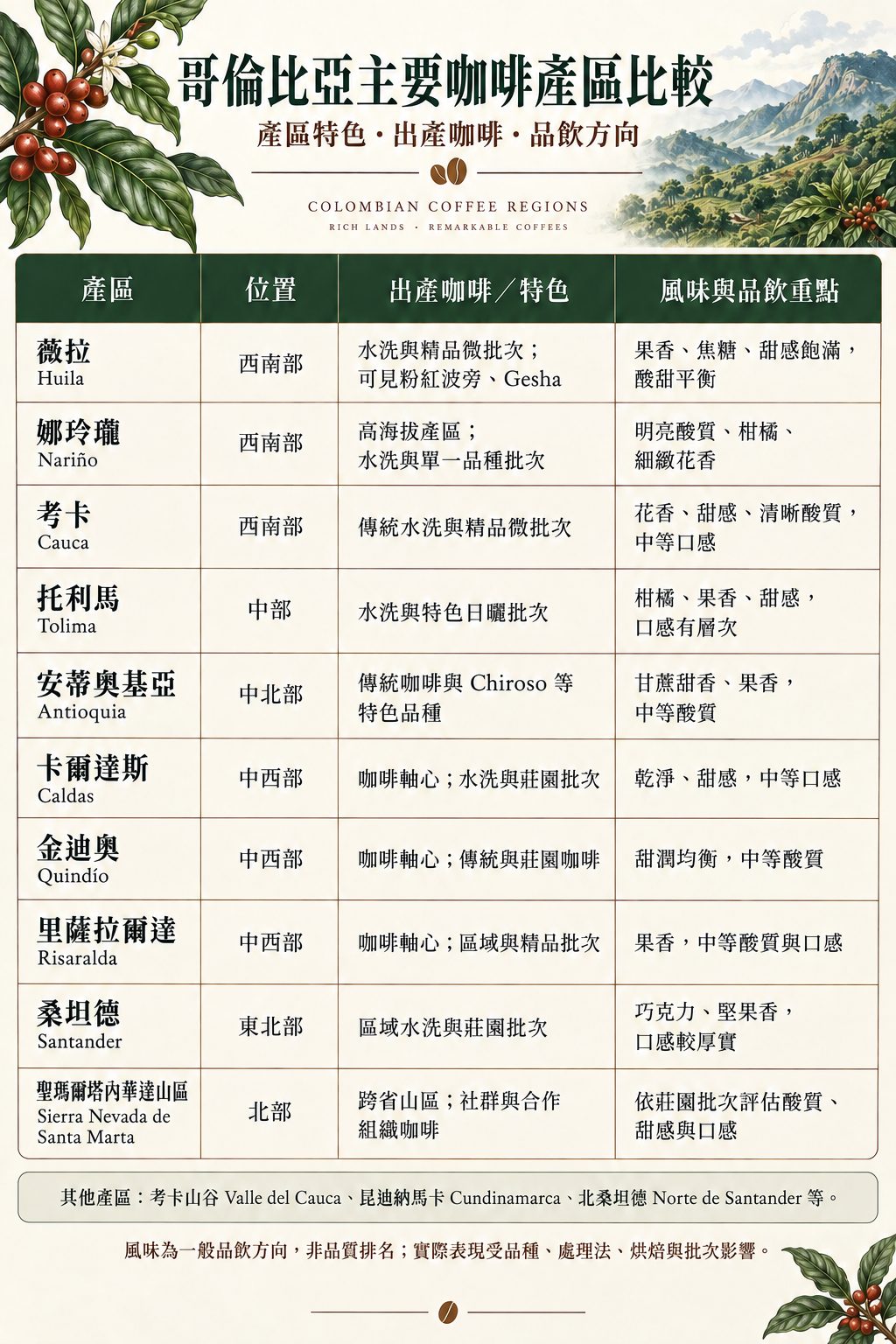
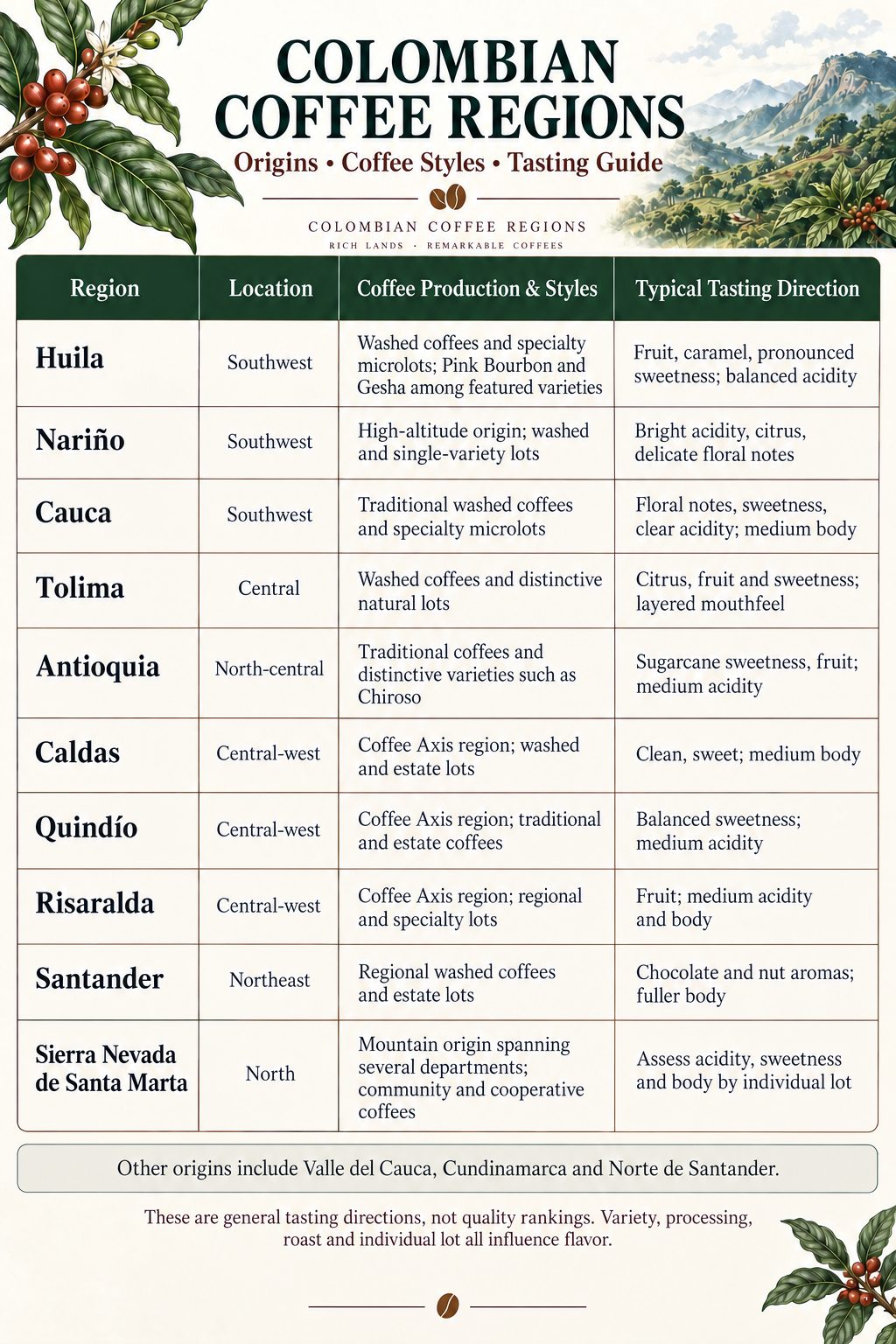
Colombian coffee grows mainly along the Andes, with important growing areas also in the Sierra Nevada de Santa Marta in the north. Names like Huila, Nariño, and Cauca on coffee bags usually refer to the region, not the variety. Differences in altitude, climate, and farming culture give each region its own flavor direction.
The flavor notes below are general tasting guides, especially useful for traditional washed lots, and are not quality rankings. Variety, processing, roasting, and lot all affect the final taste.
Huila
Full sweetness, rich fruitiness
Located in southwestern Colombia, Huila is an essential starting point for understanding Colombian specialty coffee.
Terrain and altitude:Farms lie on the slopes of the Central and Eastern Cordilleras and around the upper Magdalena River. The Huila designation of origin defines its coffee zone at 1,000–2,200 meters; this is the range for the region, not the altitude of every farm.
Climate:Temperature and rainfall differ between valleys and high slopes; higher areas are usually cooler, and day–night temperature swings also depend on slope orientation and cloud cover. Rainy seasons can’t be represented by a single city’s climate and should be read by farm location.
Impact on coffee growing:Cherries on cooler plots usually ripen more slowly, so harvests must follow local flowering and ripening. If rain continues during harvest, drying requires rain protection, ventilation, and moisture monitoring.
Coffees produced:Castillo, Colombia, and Caturra are common, along with single-variety micro-lots such as Pink Bourbon and Gesha.
Flavor notes:Pronounced sweetness with fruity and caramel notes; acidity and body can reach medium-high, while overall balance remains key.
Tasting tips:Notice whether sweetness lingers after the fruity acidity, and how layered the aroma is.
Nariño
Bright acidity, delicate aroma
Located in the far southwest near Ecuador, it is a renowned high-altitude coffee region.
Terrain and altitude:Farms sit on Andean slopes and in deep valleys; Cenicafé origin records place them at about 1,300–2,300 meters, and a single farm may span a significant range of altitude.
Climate:High altitude brings cooler temperatures, while warm, humid valley air and cool mountain nights combine to form microclimates. Dry and wet seasons, sunshine, and day–night temperature swings vary by slope, so no single set of figures applies everywhere.
Impact on coffee growing:Cool temperatures slow cherry growth and ripening, so harvesting should be done in rounds based on each plot’s ripeness. During drying, watch for nighttime humidity and changing weather; high altitude alone doesn’t guarantee quality or particular aromas.
Coffees produced:Washed lots of Castillo and Colombia, as well as single-variety coffees from specialty estates.
Flavor notes:Often noted for vivid acidity, sweetness, and complex fruit aromas.
Tasting tips:Look for citrus-like freshness, florals, and a clear interplay of acidity and sweetness. Lemon, brown sugar, or floral notes from a single lot shouldn’t be applied to the whole region.
Cauca
Floral, clear acidity, balanced
Located in southwestern Colombia, Cauca is a benchmark specialty coffee region.
Terrain and altitude:The growing area includes the Popayán Plateau, surrounding slopes, the Colombian Massif, and the Tierradentro mountains. Farms in the central zone average about 1,700 meters—a useful reference, but not the altitude range for the whole department.
Climate:The highlands are cooler, while some northern mountain areas are influenced by warm winds from the Cauca River Valley; temperature swings and humidity vary between sub-regions. Rainfall and slope position also change moisture and sunlight on each farm.
Impact on coffee growing:Ripening and harvest timing should be planned by sub-region. Hillside farming must balance drainage and soil protection; in wet harvest seasons, lots should be dried separately with good rain protection and ventilation.
Coffees produced:Traditional washed coffees and specialty micro-lots from various estates.
Flavor notes:Often shows higher acidity, medium body, sweetness, florals, and caramelized aromas.
Tasting tips:Notice whether the aroma is delicate and whether the bright acidity is in harmony with sweetness. A great way to get to know Colombian coffee that has lively acidity yet stays clean and balanced.
Tolima
Balanced acidity and sweetness, layered flavor
Located in the central Andes, it is an important coffee region.
Terrain and altitude:Farms lie mainly on the slopes of the Central Cordillera and in its tributary valleys. In parts of the north, historical Cenicafé zoning records coffee concentrated at 1,300–1,800 meters; this range shouldn’t be applied directly to the south or other mountain areas.
Climate:Slope altitude and wind exposure create climate differences. Some northern areas have two drier periods a year, but that doesn’t mean all of Tolima shares the same rainfall or harvest rhythm.
Impact on coffee growing:Different flowering times can lead to staggered harvests. In rainy periods, harvest volume must match drying capacity to avoid a backlog of fresh cherries or wet beans; hillside farms also need good drainage.
Coffees produced:Washed Castillo and Colombia are common, along with specialty lots such as natural Pink Bourbon.
Flavor notes:Sweet, citrusy, and fruity, with medium-high acidity and body.
Tasting tips:Notice the balance of fruitiness, sweetness, and body. The same region can produce clean washed coffees as well as naturals with vivid tropical fruit notes.
Antioquia
Traditional style and distinctive varieties coexist
Located in north-central Colombia, it is a historic coffee region with farms ranging from smallholdings to large estates.
Terrain and altitude:Farms are spread across the slopes and valleys of the Central and Western Cordilleras. FNC regional studies place the main coffee belt in central and southern Antioquia at about 1,200–2,000 meters, though altitude and terrain vary across the department.
Climate:The central coffee belt usually has two relatively dry and two wetter periods each year. Temperature, cloud cover, and rainfall differ between valleys and high slopes, and day–night temperature swings vary by location and season.
Impact on coffee growing:Alternating wet and dry periods affect flowering and the spread of ripe cherries, so main and secondary harvests may not coincide from farm to farm. Cooler high plots may ripen later, and humid periods call for stronger drying and moisture control.
Coffees produced:Traditional coffees from disease-resistant varieties, as well as notable specialty lots of Chiroso.
Flavor notes:Coffees from the region can show sugarcane sweetness, fruity notes, medium acidity, and a juicy mouthfeel.
Tasting tips:Notice the balanced sweetness of traditional lots and the distinctive aromas of varieties such as Chiroso. Raspberry or chocolate notes in individual natural lots are not a fixed flavor of the whole region.
Coffee Axis | Eje Cafetero
Caldas, Quindío, Risaralda
Caldas, Quindío, and Risaralda are key to understanding Colombia’s traditional coffee culture and are often collectively called the Eje Cafetero (Coffee Axis).
Terrain and altitude:The coffee belt of Caldas, Quindío, and Risaralda lies in the hills, slopes, and valleys of the Central and Western Cordilleras. Regional literature generally places the main altitude at about 1,200–2,000 meters, though each department varies.
Climate:Mostly humid mountain environments, with two rainy seasons common in the central coffee belt. Valley winds, slope orientation, and cloud cover change sunlight, day–night temperature swings, and drying conditions, so the three departments shouldn’t be treated as one climate zone.
Impact on coffee growing:Multiple flowerings mean harvests happen in rounds. Hillside farms should balance soil cover and drainage; in humid conditions, covered drying areas, ventilation, and lot moisture control are especially important.
Coffees produced:Washed coffees, regional lots, and coffees from individual estates, including specialty lots.
Flavor notes:Generally clean, sweet, and medium-bodied, with possible fruity and herbal notes and medium acidity.
Tasting tips:The three departments overlap considerably in flavor, so they shouldn’t be forced into three distinct profiles; when comparing, go back to estate, variety, processing, and the actual lot.
Santander
Full body, chocolate and nutty notes
Located in northeastern Colombia.
Terrain and altitude:Farms are on the slopes, plateaus, and river valleys of the Eastern Cordillera. In historical zoning, the Socorro area sits at about 1,200–1,900 meters; other sub-regions differ, so no single altitude represents the whole department.
Climate:Wet and dry periods are distinct; some areas see less rain from late in the year to early the next year, and again mid-year. Moisture differs between drier slopes and wetter mountain areas, and temperature changes with altitude.
Impact on coffee growing:During dry periods, watch for water stress and provide appropriate shade; the return of rain triggers flowering. After harvest, keep monitoring drying—don’t assume beans are dry just because the weather has been sunny.
Coffees produced:Regional washed coffees and estate lots.
Flavor notes:Often shows sweet, chocolate, and nutty aromas, medium citrus acidity, and a medium-high, creamy body.
Tasting tips:Notice the body, smoothness, and sweetness in the mouth. It’s often described as a region with softer acidity, but that doesn’t mean it has no acidity at all.
Sierra Nevada de Santa Marta
Coffee from the Caribbean mountains
Located in northern Colombia, this mountain region spans several departments, with coffee areas in parts of Magdalena, Cesar, and La Guajira.
Terrain and altitude:This coastal mountain range is separate from the Andes. Historical zoning records the coffee belt on the western side of Magdalena at about 500–1,700 meters; growing zones differ by slope and department.
Climate:The drop from mountains to coast creates many microclimates; the northern coffee belt is usually drier from late in the year to early the next, while rainfall still varies considerably across slopes.
Impact on coffee growing:Dry-season water management and shade must be adjusted by slope. Flowering after rain and local temperatures affect ripening time; harvesting and drying should follow actual farm conditions.
Coffees produced:Coffees traceable to mountain communities, cooperatives, and farms, including Indigenous producers.
What makes it distinctive:Its mountain environment near the Caribbean and a farming culture different from the central and southern Andes are key to understanding this region.
Tasting tips:Because the region is so broad, descriptions of acidity, sweetness, and body should be based on the actual lot—not labeled across the board as low-acid or chocolatey.