Studio
Colombian Coffee
Discover the diverse flavors of Colombian coffee through its regions and processing
Colombian Coffee Regions
Colombian coffee is a regular on café menus, pour-over selections, and espresso blends. For many people, it’s the first coffee that shows them how smooth and layered coffee can be. With its harmonious balance of sweetness, acidity, and body, it’s an ideal starting point for understanding how growing regions differ.
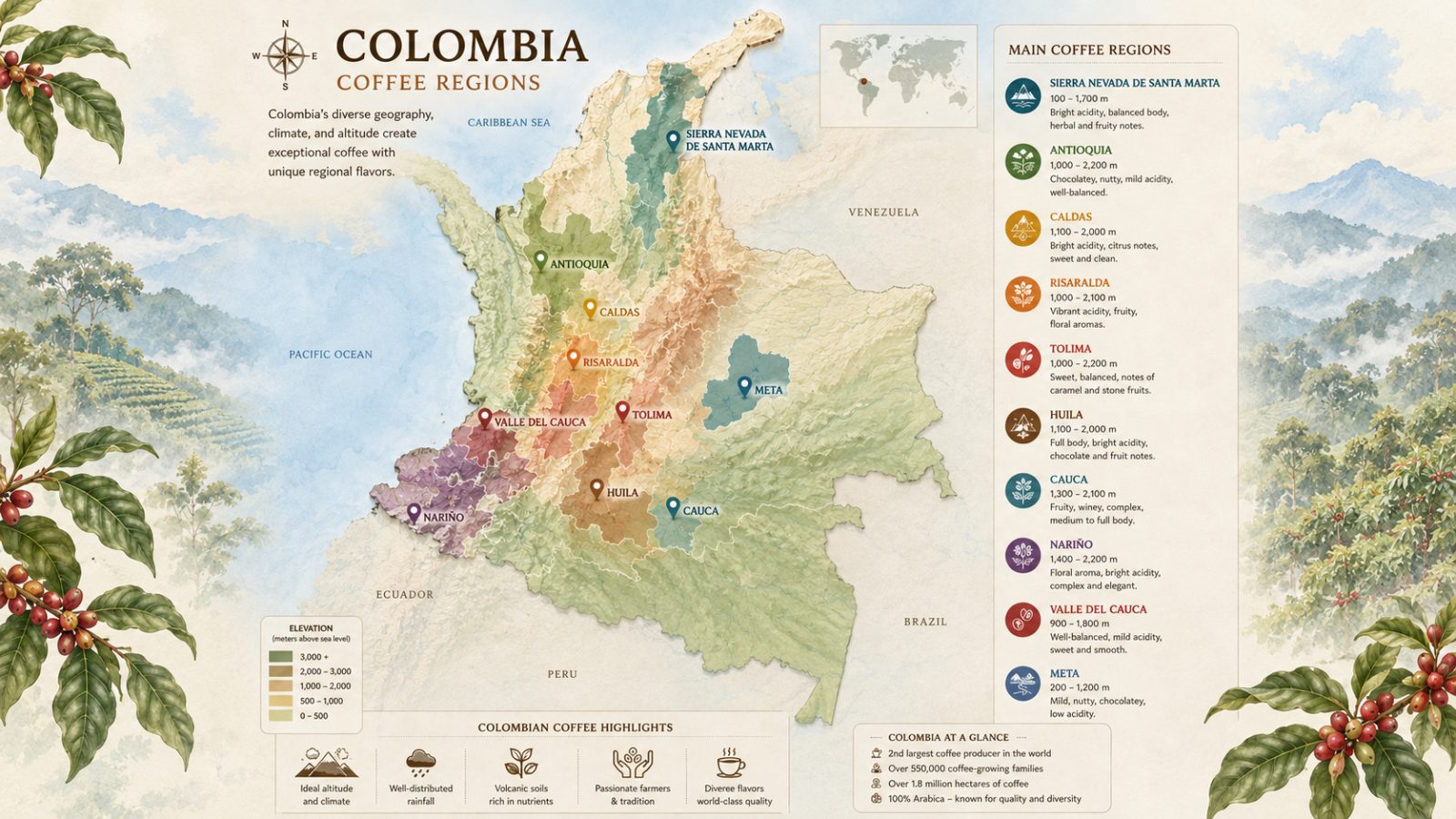
Colombia’s coffee grows mainly along the Andes, running through the north, center, and south to form a coffee belt that stretches the length of the country, while the Sierra Nevada de Santa Marta rises along the northern Caribbean coast. Differences in altitude, climate, and farming culture give each region its own flavor direction.
Names like Huila, Nariño, and Cauca on coffee bags usually refer to the growing region, not the variety. The flavor notes below are general tasting guides; actual results still depend on variety, processing, and roasting.
Main Regions and Flavor Profiles
 Huila
HuilaSouthern highlands
Castillo, Colombia, and Caturra are common, along with Pink Bourbon and Gesha micro-lots. Sweetness stands out, often with fruity, citrus, and caramel notes; when tasting, notice whether the sweetness lingers after the fruity acidity.
 Nariño
Near Ecuador
Located in the far southwest near Ecuador, it is a renowned high-altitude coffee region. Expect bright acidity, sweetness, and complex fruit aromas; when tasting, look for citrus-like freshness, floral notes, and a clear interplay of acidity and sweetness.
 Cauca
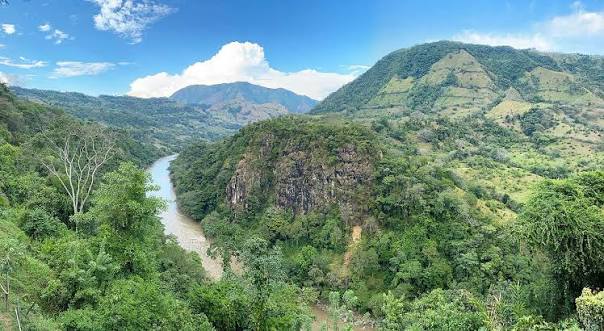
CaucaSouthwestern plateau
Known for traditional washed coffees and specialty micro-lots, Cauca often shows higher acidity, medium body, sweetness, and floral and caramelized aromas—a good way to get to know clean, balanced Colombian coffee.
 Tolima
Central Andes
Washed Castillo and Colombia are common, alongside specialty lots such as natural Pink Bourbon. Fruitiness, sweetness, and body are well balanced, and processing can bring out vivid tropical fruit notes.
 Antioquia
North-central
With a long coffee history, Antioquia ranges from smallholders to large estates. Traditional lots often show sugarcane sweetness, fruity notes, medium acidity, and a juicy mouthfeel; also notice the aromatic differences of distinctive varieties such as Chiroso.
 Eje Cafetero
The Coffee Axis
Caldas, Quindío, and Risaralda are the heart of Colombia’s traditional coffee culture. Coffees are generally clean, sweet, and medium-bodied, but the three areas overlap in flavor, so it’s best to judge by estate and lot.
 Santander
Northeast
Washed coffees from the region often show sweet, chocolate, and nutty aromas, with medium citrus acidity and a smooth, full body. Acidity may be softer, but that doesn’t mean it has none.
 Sierra Nevada
Caribbean mountains
A mountain region spanning several departments along the Caribbean coast, home to communities, cooperatives, and Indigenous producers. Because the area is so broad, descriptions of acidity, sweetness, and body should be based on the actual lot.
Why is Colombia ideal for growing coffee?
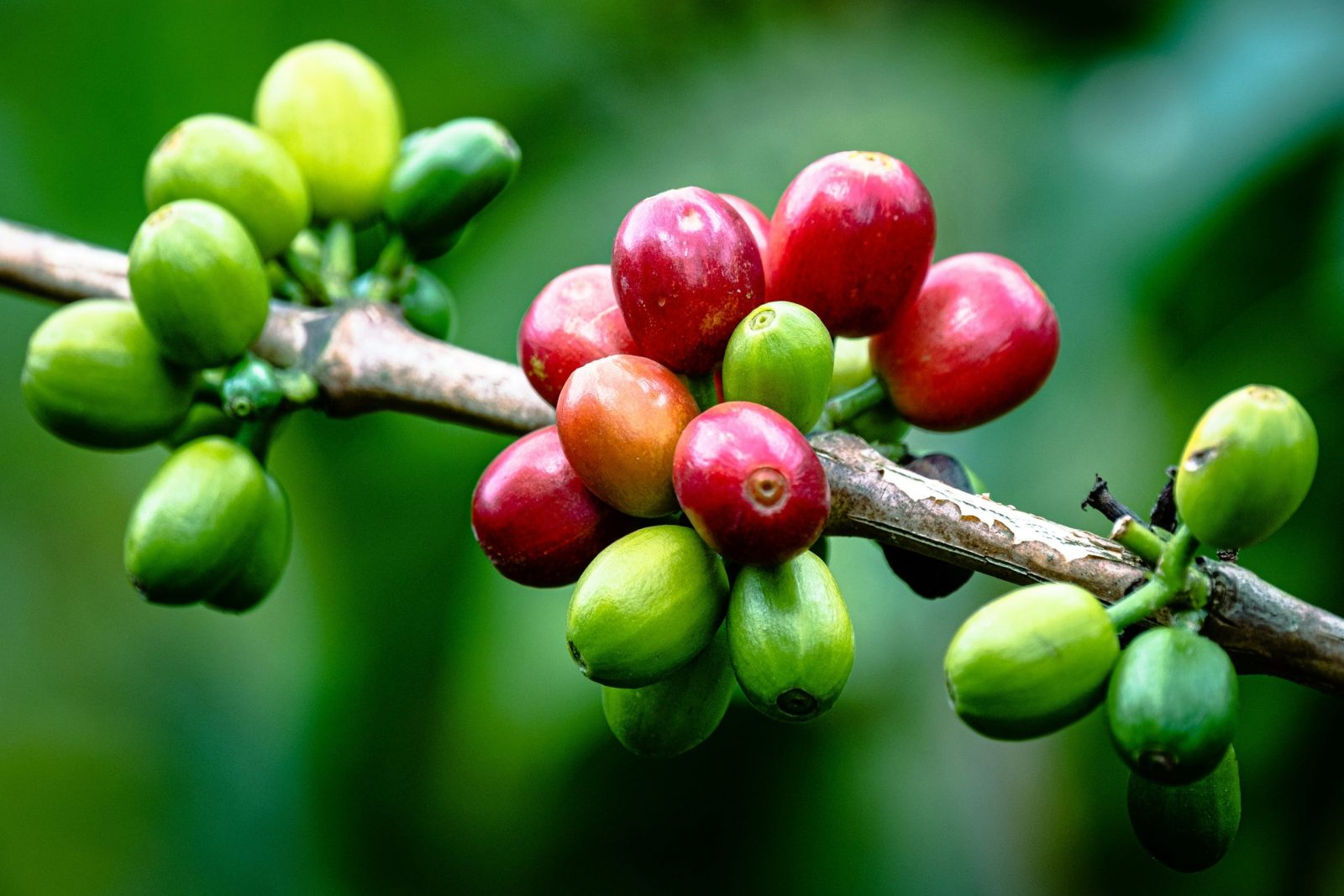
Colombia has high mountains, volcanic soils, and a stable climate. Most coffee grows at about 1,200–2,000 meters, where higher altitude slows ripening and allows sugars and aromatic compounds to develop more fully.
The Andes create diverse microclimates, and in some areas two rainy seasons bring multiple flowering and harvest periods.
- High altitudeSlower ripening builds sweetness and aroma
- Volcanic soilWith good management, supports healthy coffee trees
- Two rainy seasonsSome areas flower and harvest more than once a year
- Quality managementA mature industry system supports traceability and export management
Colombian Coffee Varieties
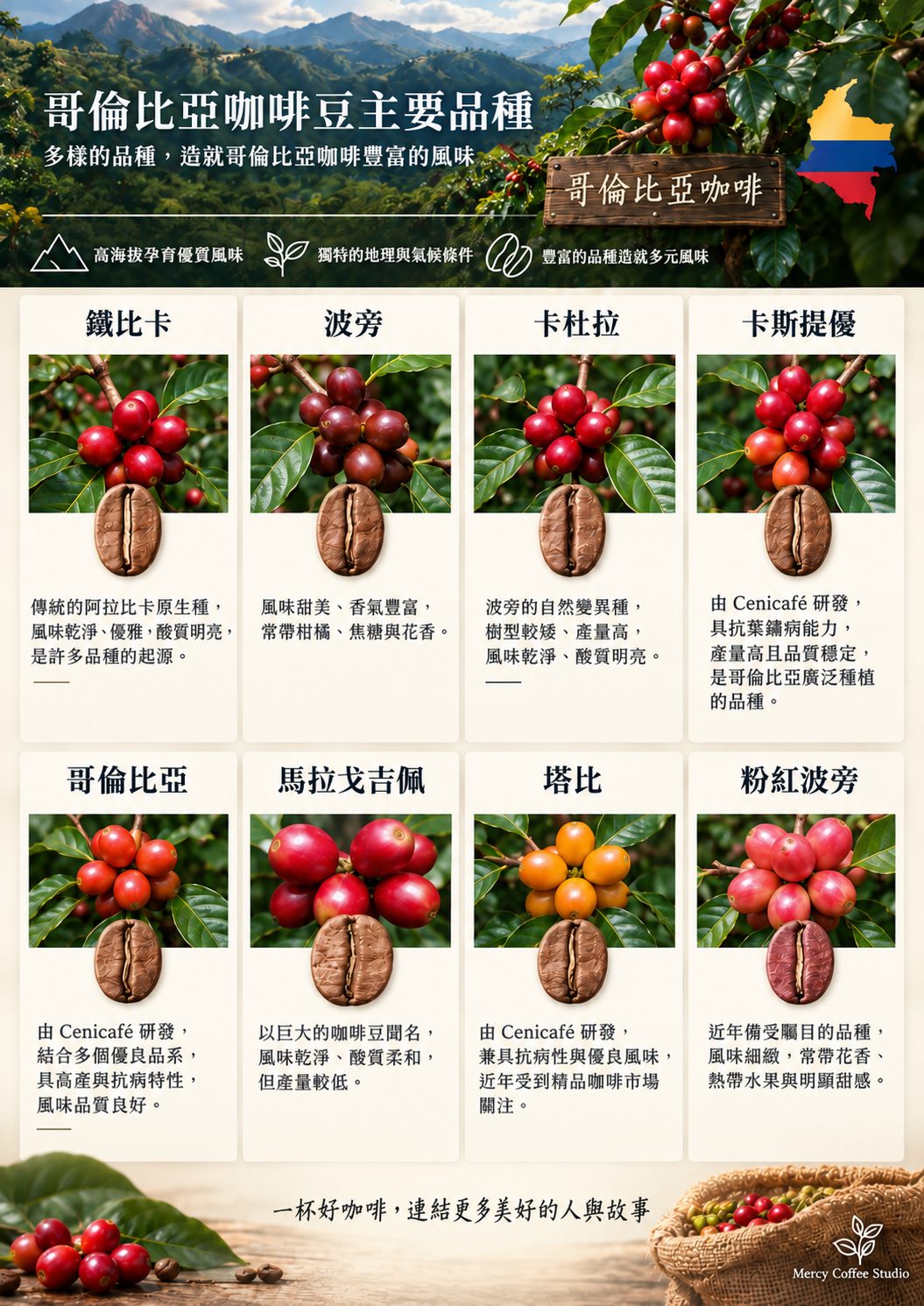
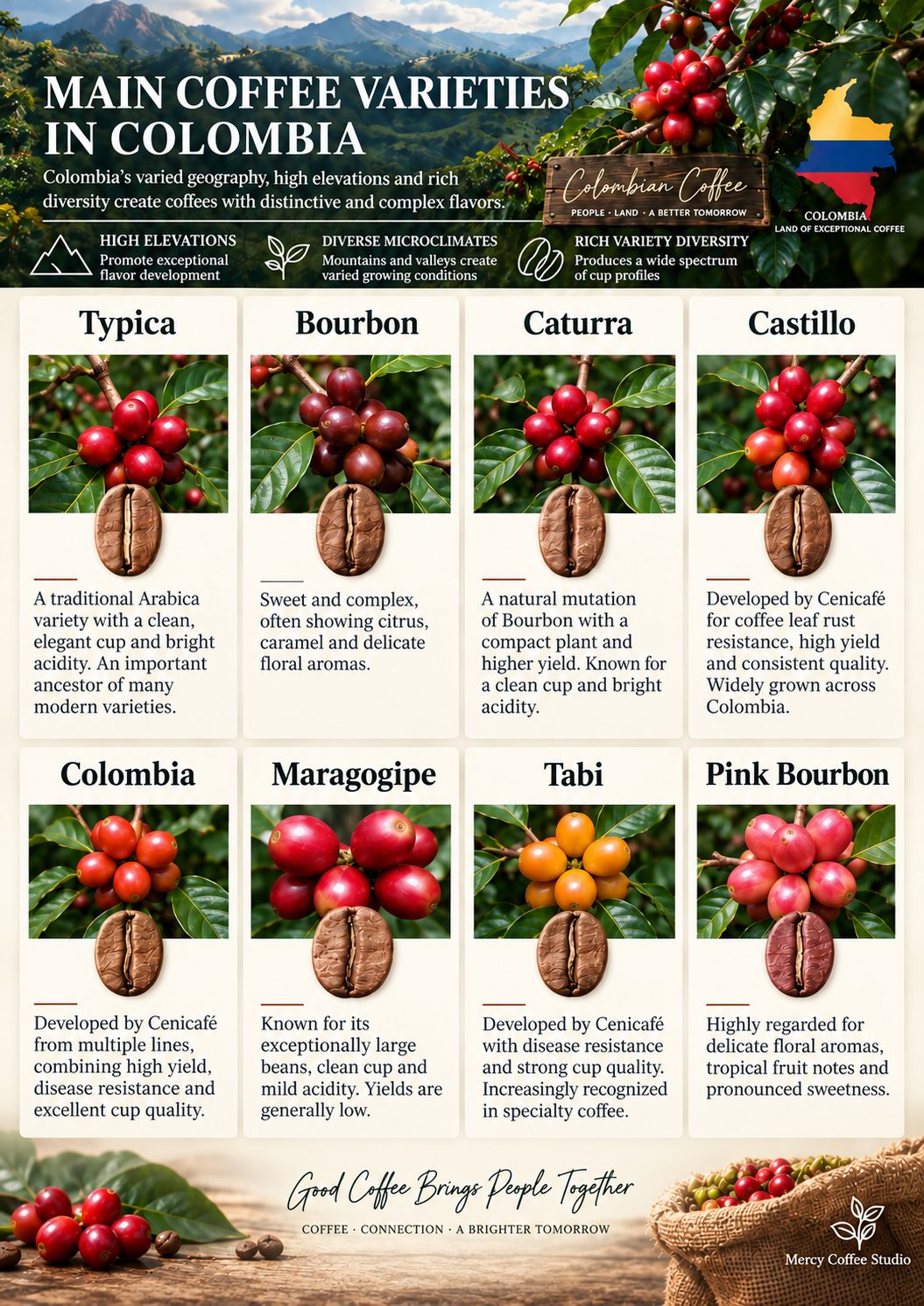
Colombia grows mainly Arabica coffee. Common varieties include Typica, Bourbon, Caturra, Castillo, Colombia, Maragogipe, Tabi, and Pink Bourbon. Traditional varieties, natural mutations, and disease-resistant cultivars each have distinct agronomic traits; flavor in the cup still depends on region, altitude, processing, and lot.
Colombian Coffee Grades
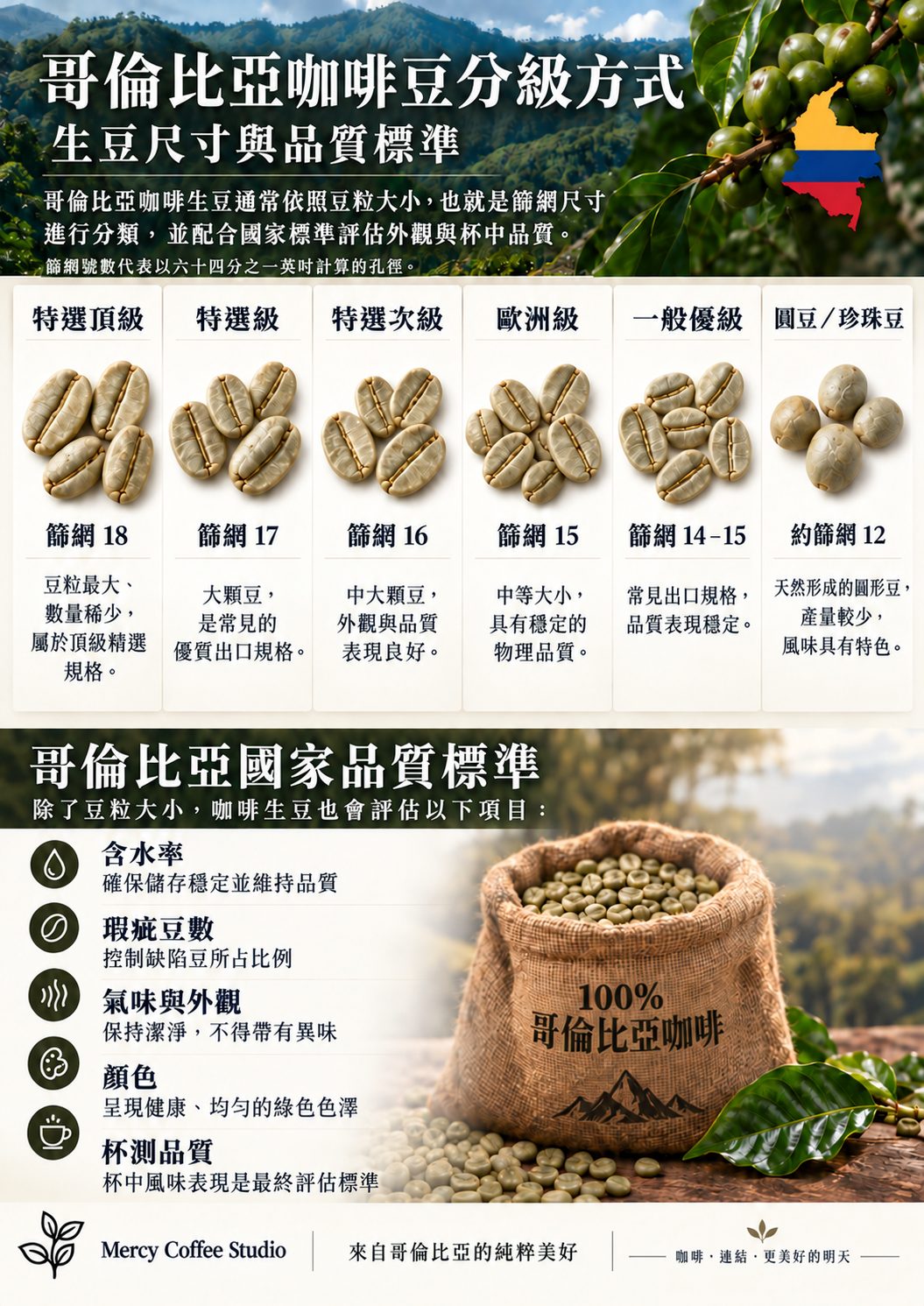
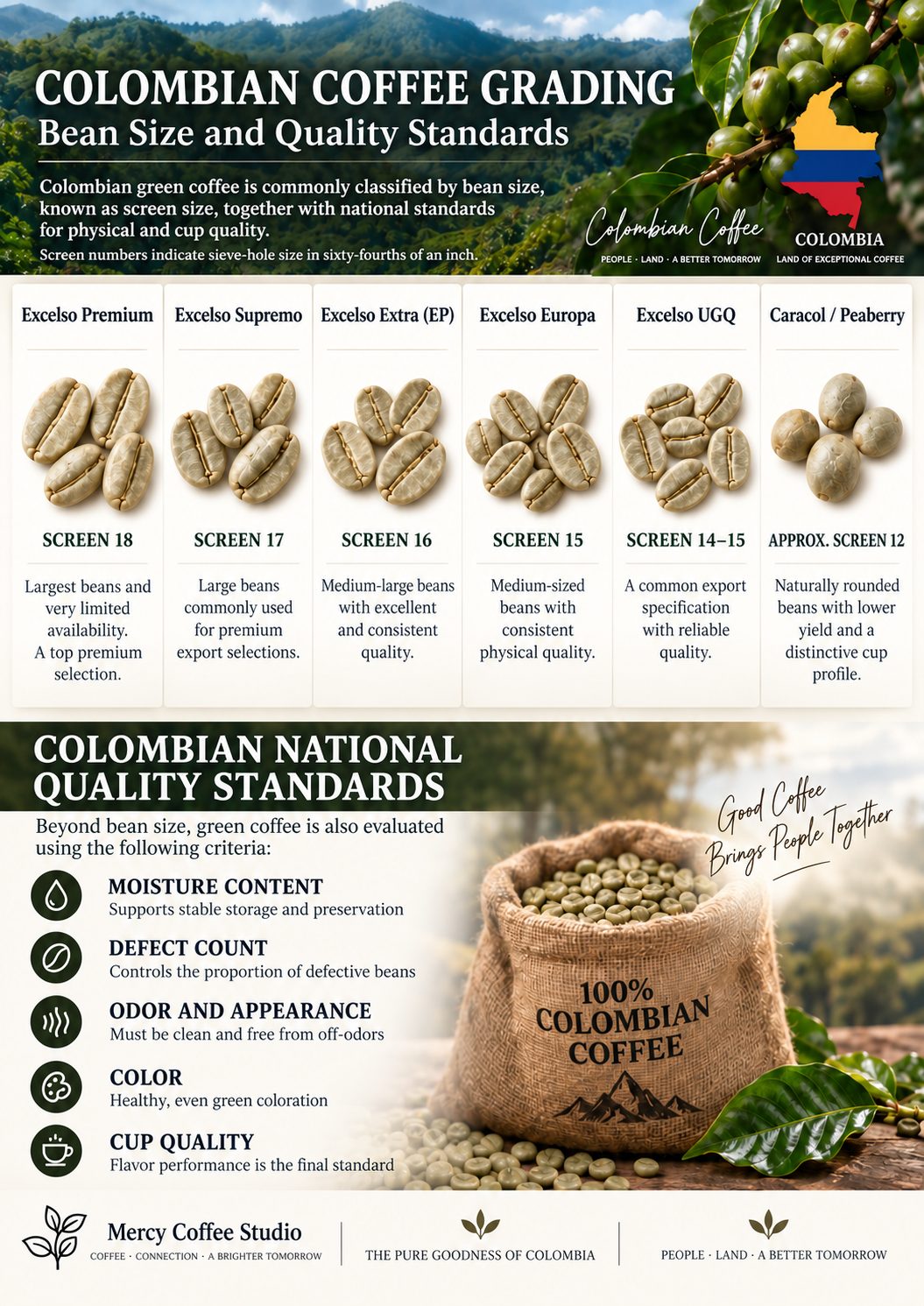
Colombian coffee is often graded by green bean size and screen size. Supremo beans are generally larger, while Excelso beans are slightly smaller but still meet export standards. This is a physical classification that mainly reflects bean size and uniformity—it does not directly indicate flavor quality.
Colombian Coffee Processing
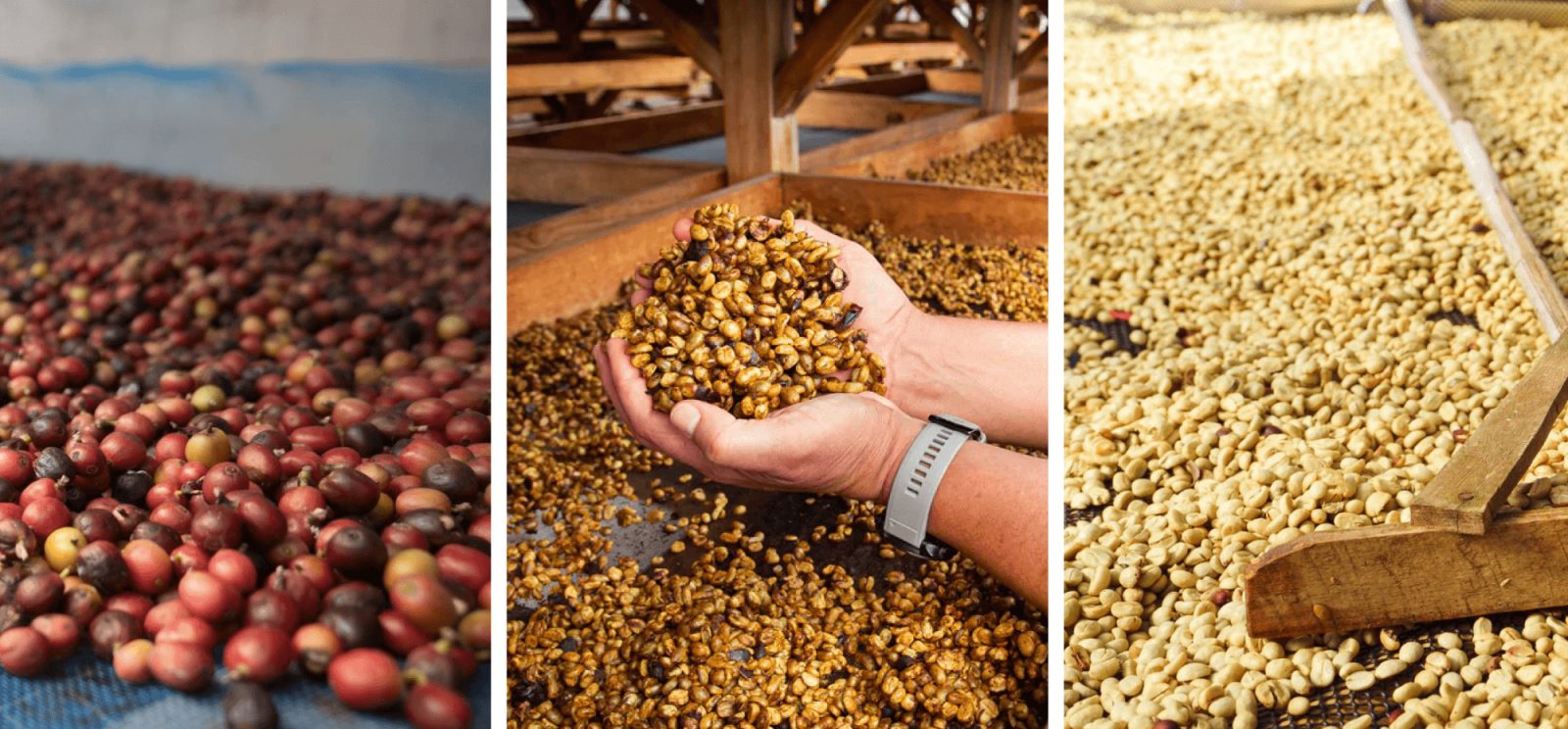
Colombia is famous for washed coffee, but it also produces natural and honey coffees, as well as coffees made with anaerobic, inoculated, or co-fermentation techniques. Processing affects clarity, sweetness, fruitiness, acidity, and body. Start by recognizing the three basic methods—washed, natural, and honey—then look at fermentation conditions and whether other ingredients were added; coffee labels will be much easier to understand.
How Colombian Coffee Tastes
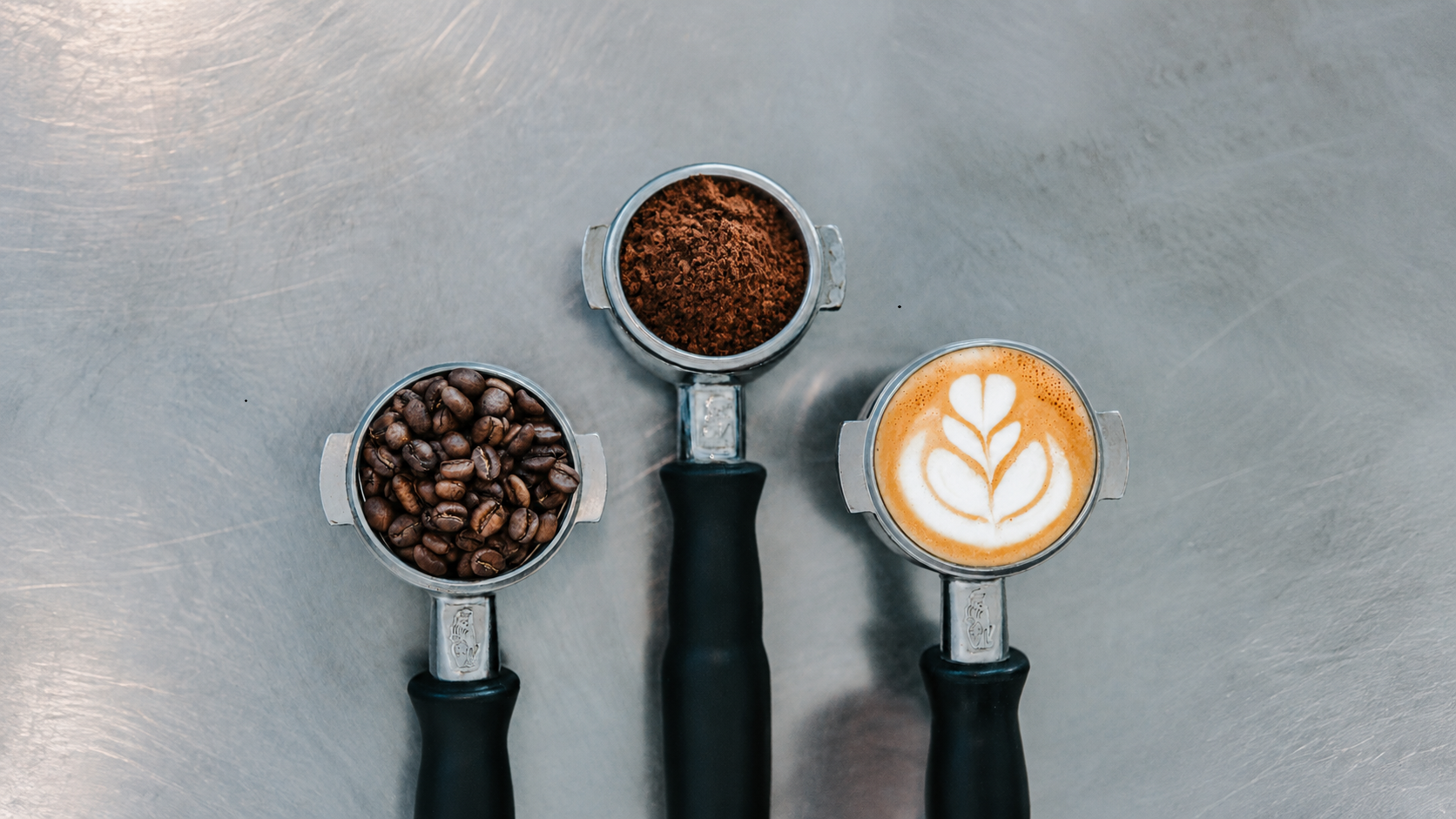
Overall, Colombian coffee tends to be balanced in acidity and sweetness, aromatic, and smooth, making it a great choice for anyone who prefers a gentle, less bitter cup. Common flavors include caramel, chocolate, and nuts, along with fruity notes such as citrus, red apple, or berries.
Tasting Profile
Medium and bright
Often reminiscent of citrus or red apple—refreshing without being sharp.
Natural sweetness
Often sweet like caramel, brown sugar, honey, or ripe fruit.
Round and smooth
Medium-bodied: neither too thin nor too heavy.
Clearly layered
Often fruity, floral, chocolatey, or nutty.
Clean and pleasant
Often leaves a lingering sweetness of cocoa, caramel, or nuts.
How Roast Level Affects Flavor
Bright and fresh
Fruity acidity, florals, and citrus stand out.
Acidity–sweetness balance
Caramel, nutty, and fruit flavors come through more fully.
Rich and full-bodied
Acidity softens, and chocolate, cocoa, nutty, and roasted aromas become more pronounced.
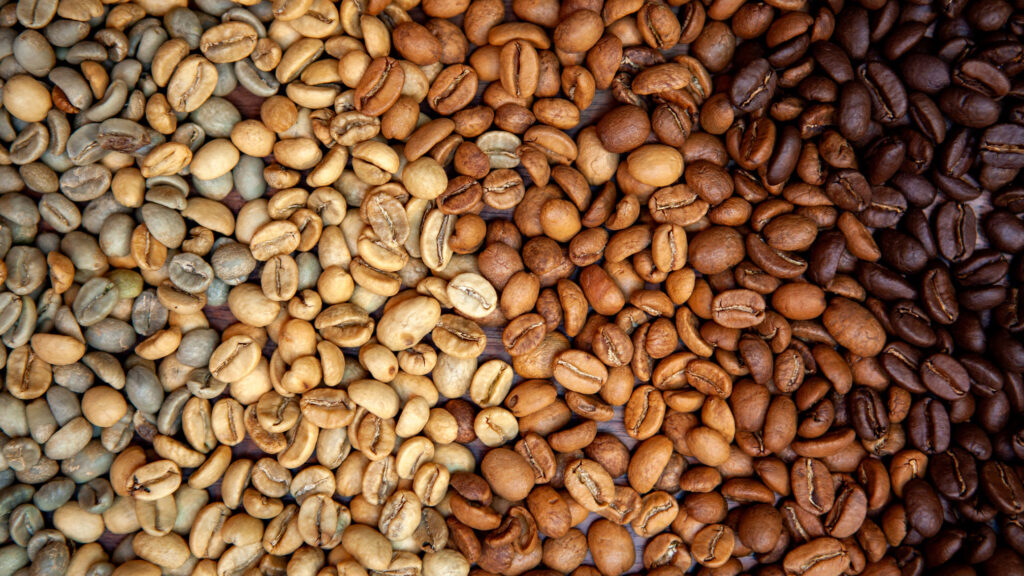
In short:A gentle start, caramel and fruity sweetness in the middle, and a chocolate or nutty finish—smooth and balanced overall.
Partnerships
From understanding origins to long-term partnership
We aim to build direct, transparent, and sustainable relationships with coffee farms and producer organizations, creating a long-term cycle of quality feedback, traceable sourcing, and shared learning.
View the Regenerative Partnership →