Studio
Coffee Knowledge
Coffee species and classic Arabica varieties
Learn about the growth characteristics, cultivation background, and common flavor profiles of six coffee species, including Geisha, Bourbon, and Typica.
Coffee Species
More than a hundred coffee species are known worldwide, but commercial production is concentrated in Arabica and Robusta. In recent years, as heat, drought, pests, diseases, and climate change put pressure on farms, lesser-known species such as Liberica, Excelsa, Racemosa, and Stenophylla have drawn growing attention from researchers and the specialty coffee market.
Each species has its own growing requirements and flavor potential, but how a coffee tastes in the cup still depends on variety, origin, ripeness, processing, and roasting.
Arabica
The world’s most important coffee species and the foundation of most specialty coffee. It usually grows in cooler, mid- to high-altitude regions and ripens slowly, often developing rich sweetness and acidity.
Typical flavors include floral, fruity, caramel, chocolate, and nutty notes. Caffeine content is about 0.8%–1.7%, and the plant is relatively vulnerable to heat, pests, and diseases.
Robusta
Thrives in warmer, lower-altitude environments, with high yields and strong disease resistance. Caffeine content is about 1.5%–2.5%, usually higher than Arabica.
Traditionally associated with cocoa, nutty, grain, or woody notes; high-quality Fine Robusta, with careful harvesting, processing, and roasting, can also show sweetness and rich complexity.
Liberica
Commercial production is small, but it holds important local cultural significance in the Philippines, Malaysia, and Indonesia. The trees are tall, and the cherries and seeds are usually large.
It may show notes of ripe fruit, jackfruit, florals, spice, caramel, smoke, or wood, varying noticeably with processing and roast level.
Excelsa
Long considered a variety of Liberica, it is increasingly recognized as a separate species. Native to Central Africa, it is well adapted to warmer environments.
Often described as bright, fruity, and complex; sometimes used in blends to add aromatic variety.
Racemosa
Native to Mozambique and the southeastern coast of Africa, it tolerates heat, drought, and a pronounced dry season, and its cherries ripen relatively quickly.
Naturally low in caffeine, it may show floral, herbal, spicy, citrus peel, or blackcurrant notes, and has breeding value for heat and drought tolerance.
Stenophylla
Native to West Africa, it nearly disappeared from commercial cultivation but has recently regained research attention. It can grow in warmer conditions than Arabica.
Regarded as an important species combining flavor quality with heat tolerance, but it remains very rare, and its production, propagation, and supply chain still need more research.
Coffee Species Compared
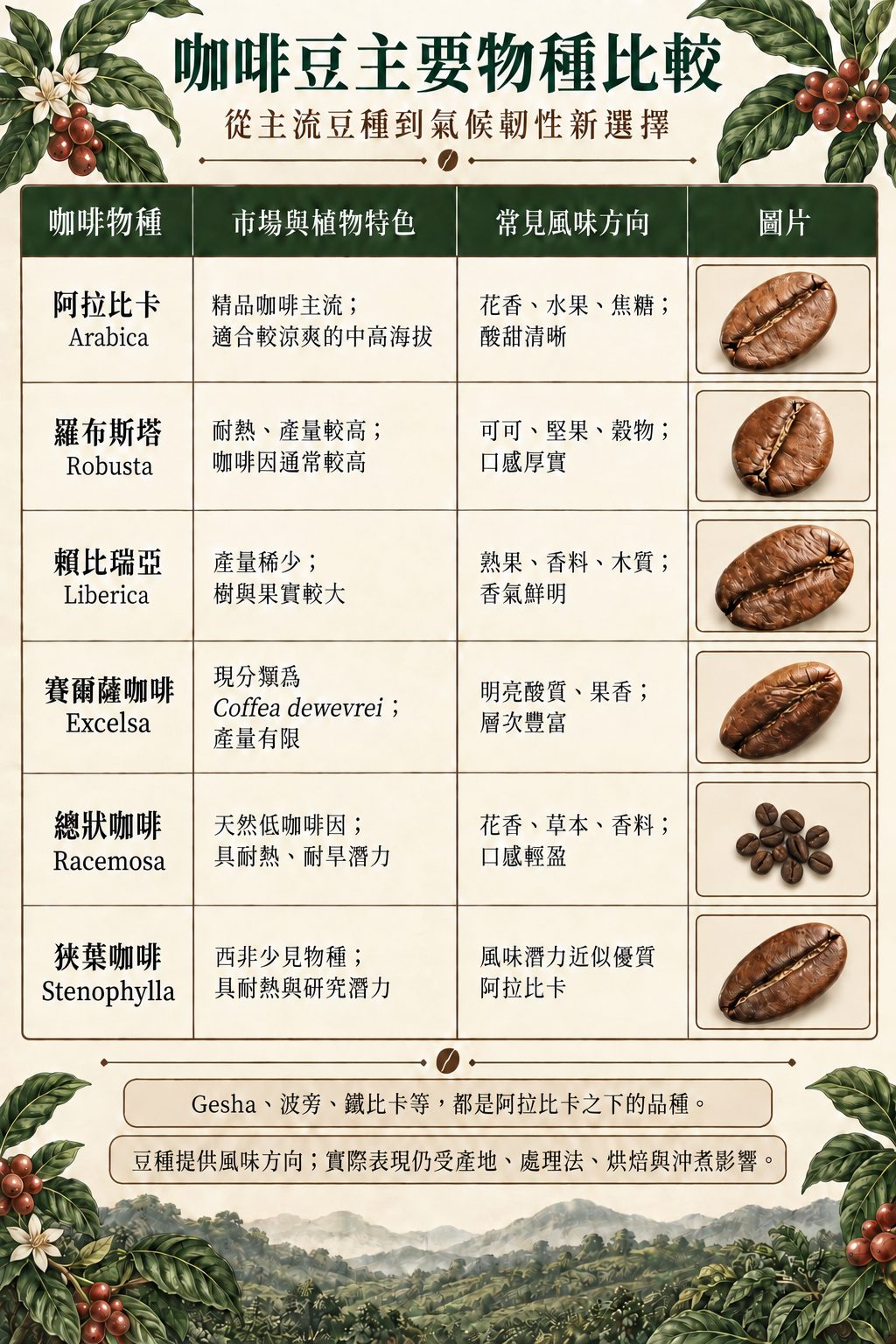
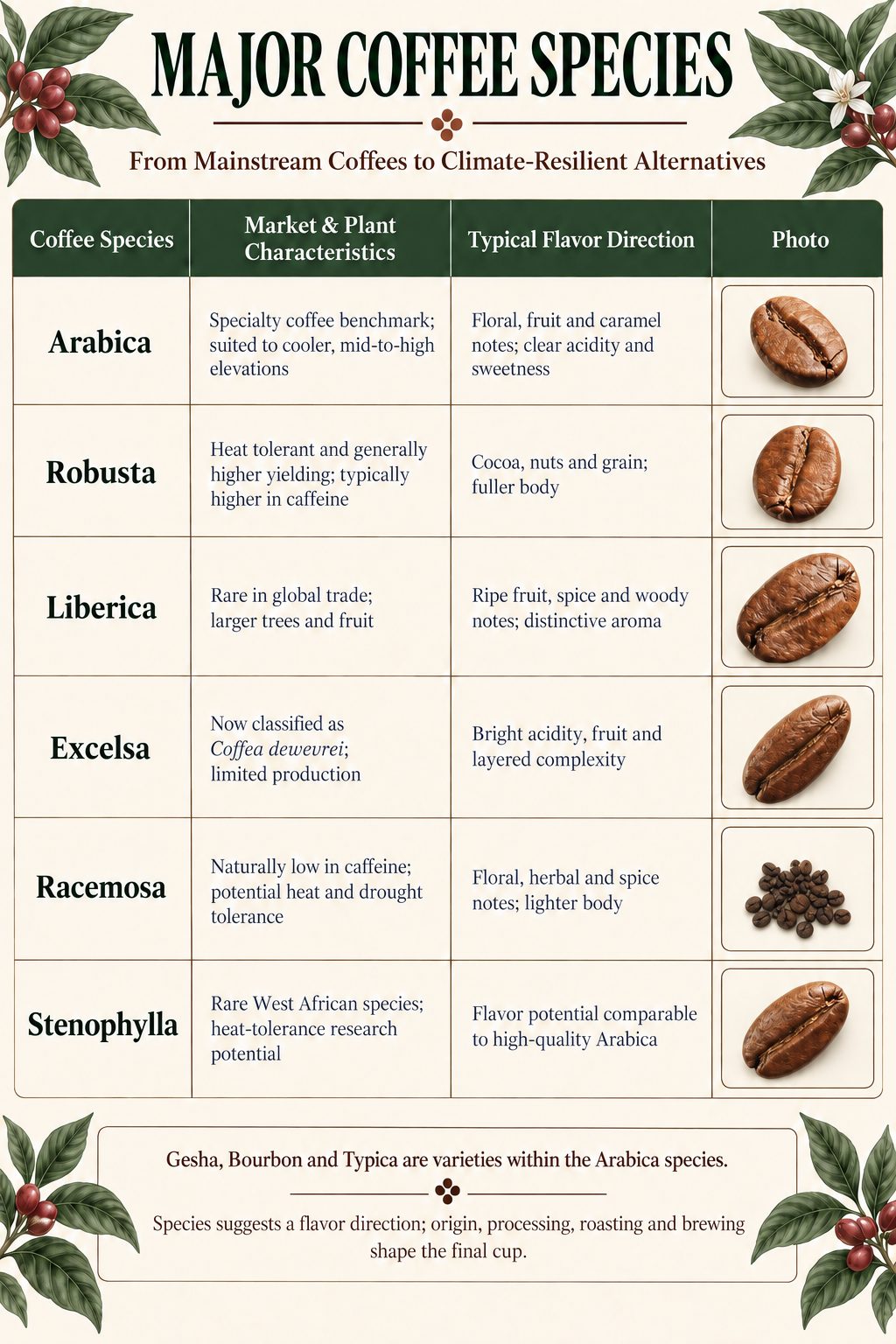
| Species | Market Position | Key Agronomic Traits | Typical Flavor Profile |
|---|---|---|---|
| Arabica | The core of the specialty market | Mid to high altitude; sensitive to growing conditions | Floral, fruity, caramel, clear acidity and sweetness |
| Canephora/Robusta | The world’s second most produced species | Heat-tolerant; higher yield and caffeine | Cocoa, nuts, grains, heavy body |
| Liberica | Small-scale commercial production | Large trees and cherries; suited to warm regions | Ripe fruit, floral, spice, smoke, wood |
| Excelsa | Limited production; renewed interest | Tall trees; potential for warm climates | Bright acidity, fruity, complex |
| Racemosa | Very small production | Heat- and drought-tolerant, fast-ripening, naturally low in caffeine | Floral, herbal, spice, citrus peel |
| Stenophylla | Research and trial stage | Tolerates higher temperatures; very limited cultivation | Complex, sweet, comparable to fine Arabica |
Arabica Varieties
Three Well-Known Specialty Varieties
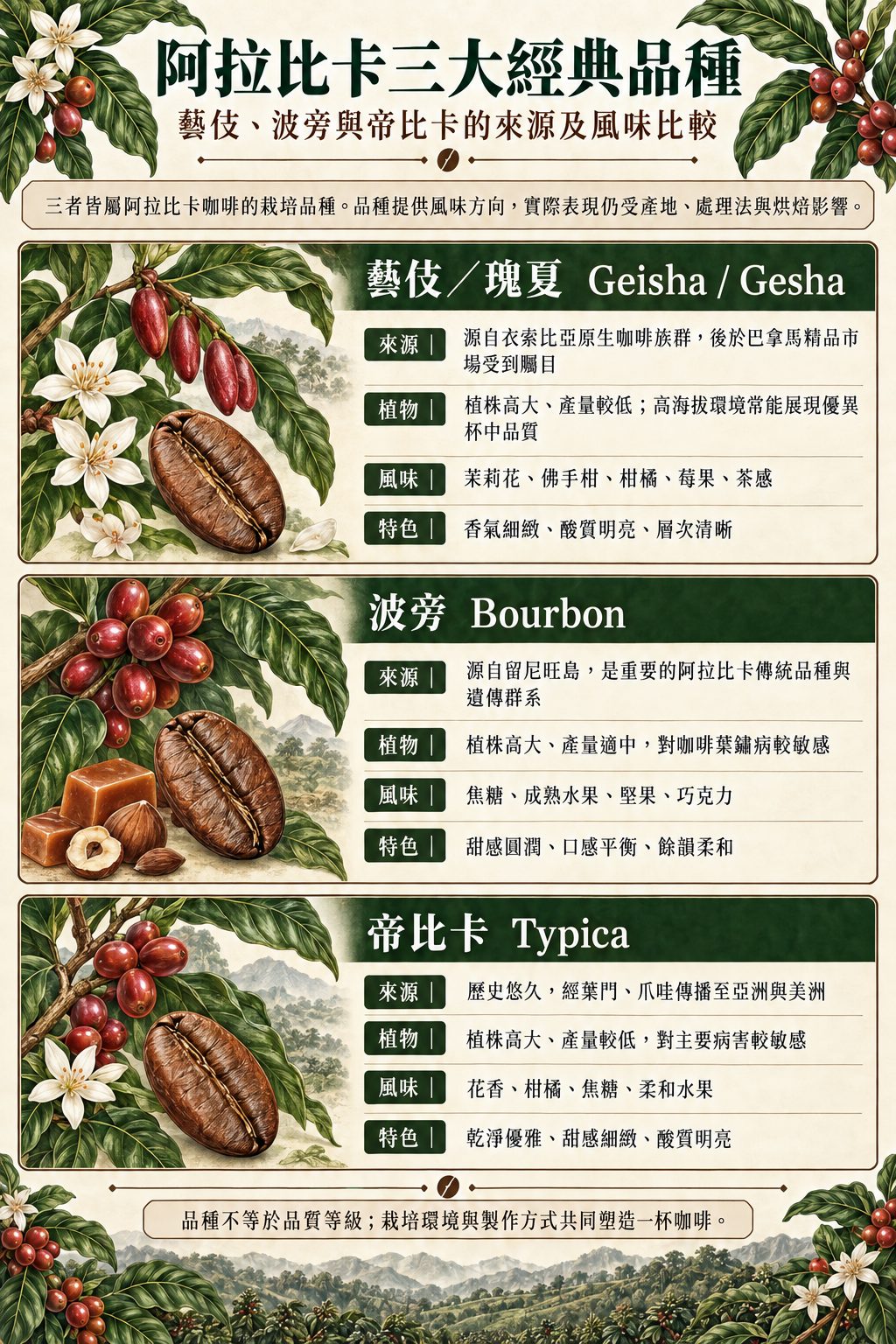
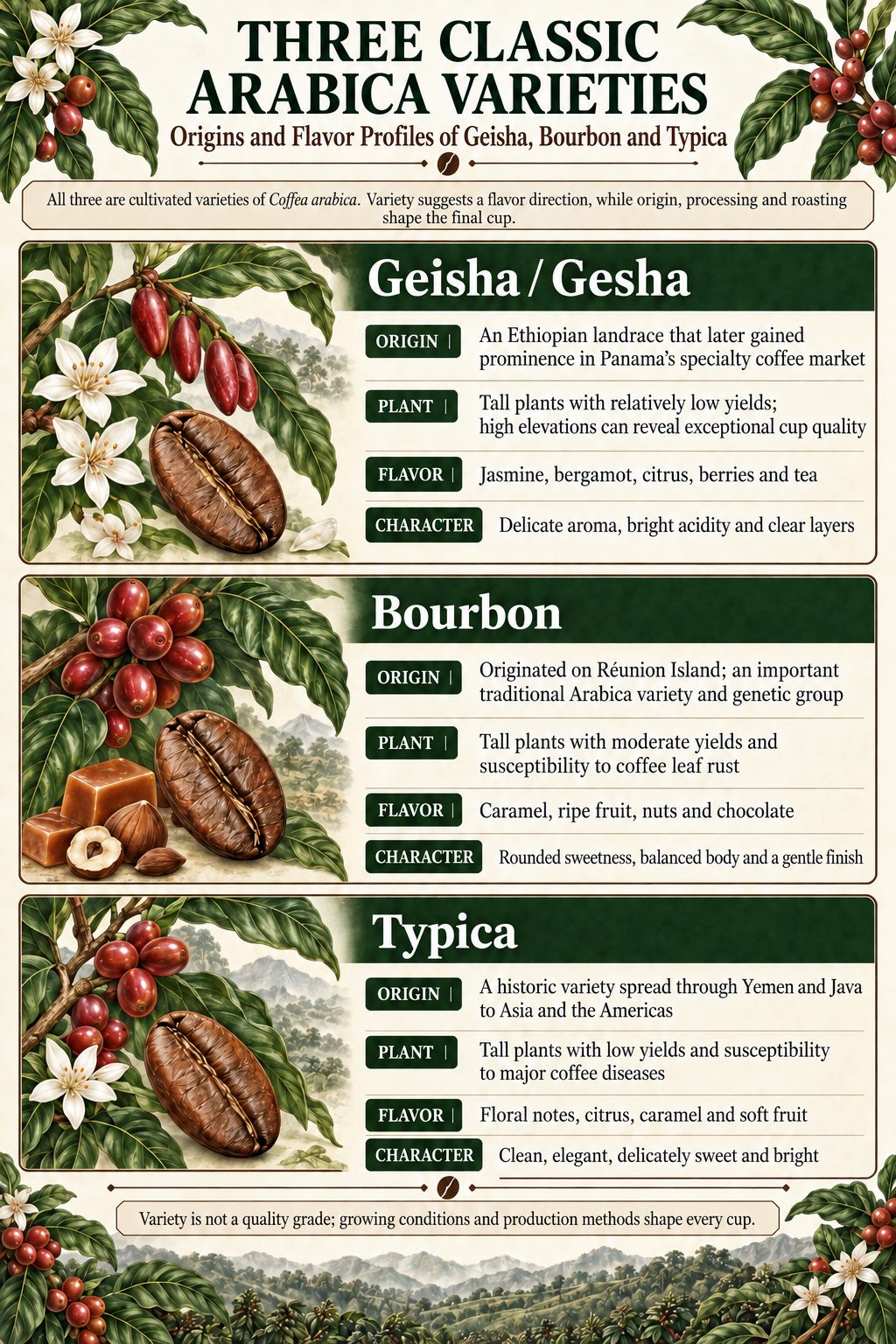
Geisha, Bourbon, and Typica are all cultivated varieties of Arabica. Whether a coffee is high quality still depends on origin, altitude, processing, roasting, and the performance of each lot.
Ethiopian origin
Originating in Ethiopia, Geisha later gained worldwide acclaim through Panama’s specialty coffee scene. It often shows jasmine, bergamot, citrus, berry, and tea-like notes, with bright acidity and a delicate aroma; top lots typically command high prices.
Flavor notes:Jasmine | Bergamot | Berry | Tea-like | Bright Acidity
Classic Arabica
An important traditional Arabica variety and the genetic foundation of many modern varieties. Usually sweet with a round mouthfeel, often showing caramel, ripe fruit, nutty, and chocolate notes; it has moderate yields and is relatively susceptible to coffee leaf rust.
Flavor notes:Caramel | Ripe Fruit | Rounded Sweetness | Balanced
Heritage variety
With a long history and great genetic importance, it spread to Asia and the Americas through the coffee trade. Yields are low and disease resistance is weak, but in the right conditions it can be clean, elegant, delicately sweet, and brightly acidic.
Flavor notes:Clean | Elegant | Soft Sweetness | Bright Acidity
Variety provides flavor profiles; however, the actual flavor profile in the cup will still be affected by origin, altitude, processing method, roasting, and brewing.
← Return to Coffee Knowledge