Studio
How do processing methods change the flavor?
Processing is the key stage that turns coffee cherries into green beans. Understand the three basic methods—washed, natural, and honey—before moving on to anaerobic, inoculated, and co-fermented coffees, and you’ll read coffee labels with much more confidence.
Start with the Core Concepts
Processing doesn’t dictate a single flavor
Processing removes the seeds from coffee cherries and dries them into stable green beans. Each method keeps or removes different amounts of fruit, mucilage, and fermentation influence, changing aroma, the balance of acidity and sweetness, and mouthfeel.
Processing is not a guarantee of quality. Ripeness, picking and sorting, fermentation management, drying, storage, roasting, and brewing all shape the final flavor.
Three Basic Methods
Washed, Natural, and Honey
Fruit removed before drying
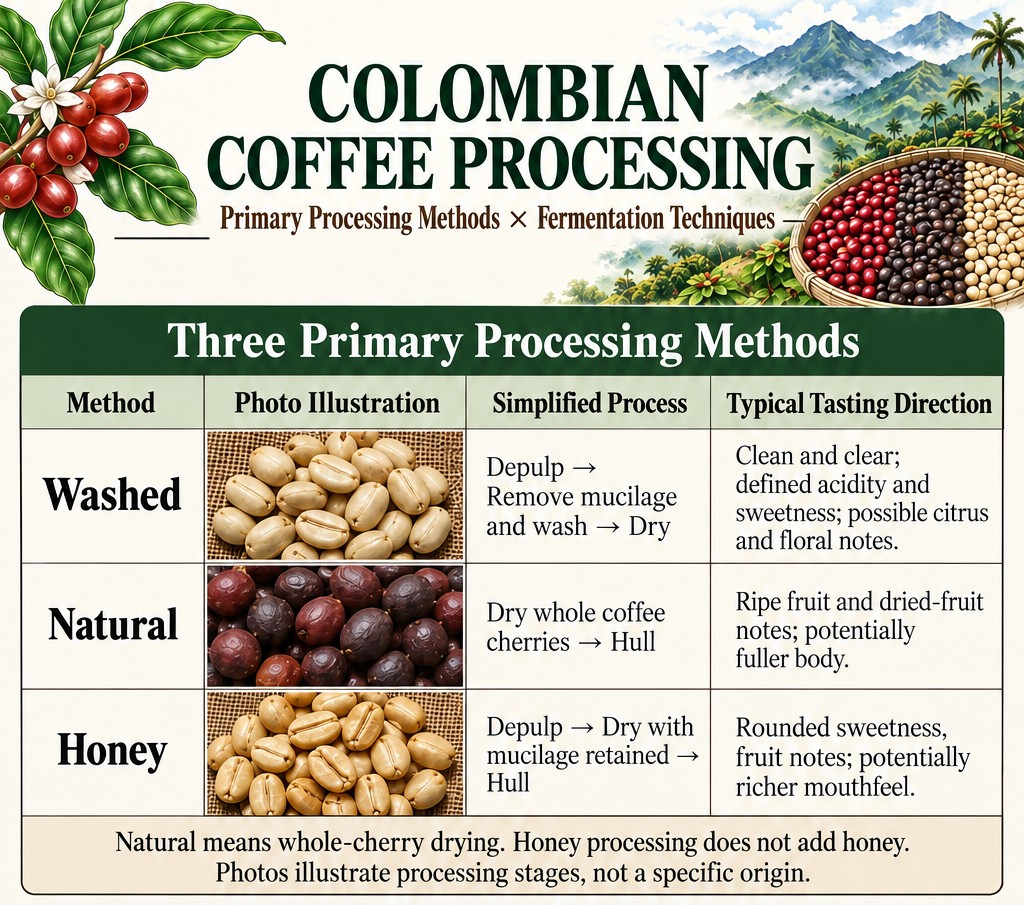
The skin and most of the fruit are removed first; the mucilage is then removed by fermentation or mechanically, and the beans are washed and dried.
Process at a glance:Picking and sorting → Pulping → Removing mucilage and washing → Drying.
In the cup:Clean, with clear acidity and easily distinguishable flavor layers.
Dried in the whole cherry
Whole coffee cherries are dried intact; afterward, the dried skin, fruit, and parchment are removed.
Process at a glance:Picking and sorting → Drying whole cherries → Hulling.
In the cup:Ripe fruit, dried fruit, and a fuller body; when done carefully, it can also be clean and clear.
Dried with mucilage
After removing the skin and most of the fruit, some or much of the mucilage is left on, and the seeds dry together with it.
Process at a glance:Picking and sorting → Pulping → Drying with mucilage → Hulling.
In the cup:Round sweetness, fruity aroma, and a fuller body; the name does not mean honey is added.
The key to a “natural” process is drying the whole cherry. Washed coffees may also be sun-dried, so drying in the sun doesn’t make a coffee a natural.
Fermentation Control
Anaerobic, Inoculated, and Co-fermented
Low-oxygen fermentation
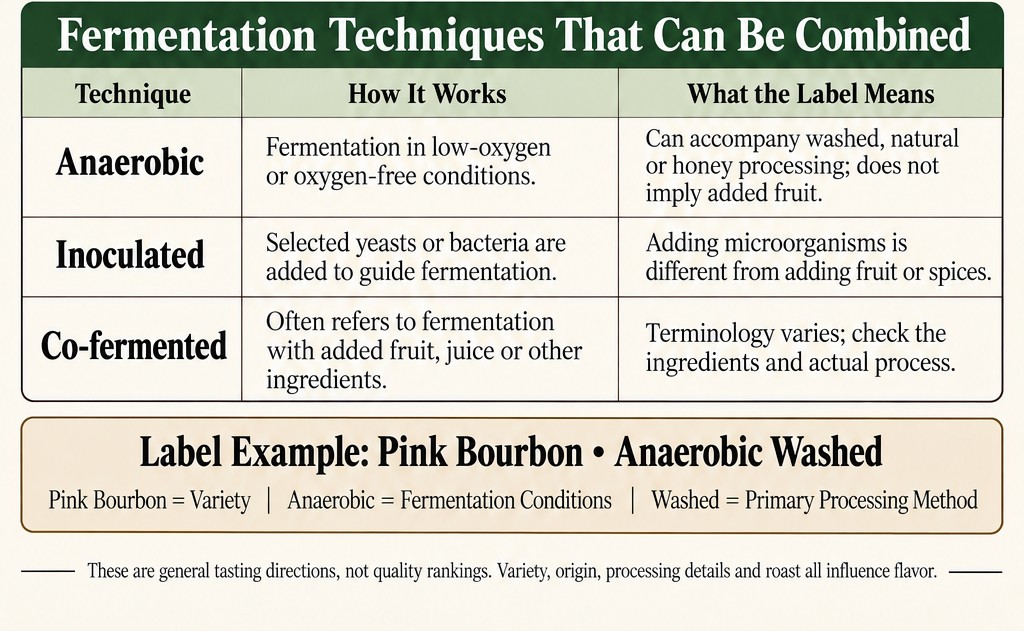
Describes low-oxygen or oxygen-free conditions during fermentation, and can be combined with washed, natural, or honey processing—for example, anaerobic washed, anaerobic natural, or anaerobic honey.
It may bring vivid fruity or fermented notes, but “anaerobic” alone doesn’t guarantee a particular flavor, nor does it mean fruit was added.
Starter-culture fermentation
Selected yeasts or bacteria are added to guide fermentation. Adding cultures is not the same as adding fruit, juice, or flavorings.
Fermented with added ingredients
In the market, this term usually describes fermentation with added fruit, juice, or other ingredients. Usage isn’t fully consistent, so check the actual additives and process on the label.
Tasting strawberry or tropical fruit isn’t enough to conclude that fruit was added; that should be confirmed by the producer’s processing records.
A quick comparison to help you remember
| Processing | Key difference | What to look for in the cup |
|---|---|---|
| Washed | Dried after mucilage is removed | Clean, clear, distinct acidity and sweetness |
| Natural | Dried as whole cherries | Ripe fruit, dried fruit, full body |
| Dried with mucilage | Pulped, then dried with mucilage | Round sweetness, fruity, fuller body |
| Low-oxygen fermentation | Oxygen controlled during fermentation | Varies by process; may be vividly fruity |
| Inoculated / Co-fermented | Specific cultures or added ingredients | Varies by culture, ingredients, and method |
How to Taste
Four things to notice when comparing processing methods
- Aroma intensityAre floral, fruity, or fermented notes pronounced?
- Acidity–sweetness balanceIs the acidity bright, and does the sweetness last?
- BodyDoes it feel light and juicy, or rich and smooth?
- Clean finishIs it pleasant after swallowing? Does it leave sweetness or off-flavors?
If you’re new to Colombian coffee, start with a washed coffee, then compare naturals, honeys, or special fermentations—it’s an easier way to build your flavor memory.